

Institute of Facial and Oral Surgery
Learning the Lingo – Dental Implants
Dental implants are a safe and effective replacement for a missing tooth or teeth. The implant is placed in your jawbone and integrates with your natural bone. This implant then forms a stable, sturdy base for your new teeth.
What They Are
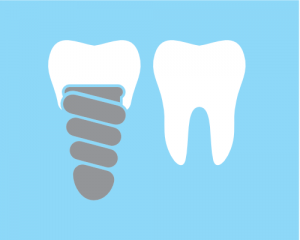
• Implant: The implant itself is a rod that is screwed into the jawbone.
• Abutment: This is the connection between the implant and the crown.
• Crown: A tooth shaped cap that is attached to the abutment. It is the part of the tooth that is visible above the gum line.
What They’re Made Of
• Titanium: Most implants are typically made of titanium, a biocompatible metal.
• Zirconia: Often used for crowns and bridges and can be used as a metal-free option. Zirconia is biocompatible just like titanium.
Where They Go
• Endosteal Implants: Placed in the jawbone. These implants are typically shaped like small screws, cylinders or plates, and they are the most commonly used.
• Subperiosteal Implants: Placed under the gum, but on or above the jawbone. These implants are mostly for people with smaller jaws or shallow jawbones.
What Happens To Them
• Osseointegration: Creates strength and durability by fusing directly to the bone and is bio-compatible. Bone cells attach themselves directly to the titanium/zirconium surface, essentially locking the implant into the jaw bone. Osseointegrated implants can then be used to support prosthetic tooth replacements of various designs and functionality. Anything from a single tooth, to all teeth in the upper and lower jaws. The teeth/crowns are usually made to match the enamel color of the existing teeth to create a natural appearance.
• Bone augmentation: Some people do not have enough healthy bone to support dental implants, so bone must be built. Procedures can include bone-grafting which means adding bone to the jaw.
Talk to us today at Institute of Facial and Oral Surgery at Institute of Facial and Oral Surgery office Phone Number (703) 729-0077 to discuss your options with an implant specialist!
Dental Implants 101
Whether you are missing a tooth, or at risk of losing many, dental implants may be a great solution for you. Dental implants are an increasingly popular fix for missing or dying teeth, and have many benefits.
What is a Dental Implant?
Dental implants are high tech teeth. The root of your current tooth is removed, and replaced with a screw attached to a ‘cap’ that looks identical to a natural tooth. Many people report higher confidence and comfort after receiving their new tooth.

What’s so Great About Them?
The cool thing about implants is that if taken care of, they can last for life. Usually all that needs to be replaced, if anything, is the cap. The other great thing about implants is that they can’t die like natural teeth. You still have to clean and maintain them like your other teeth, but no roots are any longer at risk of causing that tooth to fail. In addition to that, many implants can last a lifetime!
What is the Surgical Process Like?
The process is done either all at once, or in steps. This depends on the recommendations for your particular case. The first step is to remove the root of your natural tooth, and place the implant in its place. If there is not enough bone to place the implant, we may encourage you to have bone grafting first. The gum is then stitched closed and allowed to heal. This can take five to six months. The next step is to reopen the gum and place an abutment on the implant, along with a temporary crown so you can heal while the permanent crown is made for you. You then return to get your permanent crown attached in a few weeks. In other cases, all of these steps can be done in a single visit, but it depends on your specific case.
If you have any questions, please call our office at Institute of Facial and Oral Surgery office Phone Number (703) 729-0077 for more information, we would be glad to help!
Types of Jaw Surgery
Your jaw consists of two parts; the maxilla or upper jaw and the mandible or lower jaw . Sometimes these are misaligned and need to be put back into place for bite reasons, or for aesthetic purposes. Corrective jaw surgery straightens or aligns the jaw, and is often referred to as “orthognathic” surgery; “orthos” meaning to straighten and “gnathic” relating to the jaw.
There are a few different types of jaw surgery, depending on which part of your jaw requires correcting;
• Maxillary Osteotomy (Upper Jaw)
This type of surgery corrects a significantly receded upper jaw, cross bite, or when you have too many or too few teeth showing. It also can adjust an open bite.

• Mandibular Osteotomy (Lower Jaw)
This surgery corrects a significantly receded lower jaw. The surgeon moves the jawbone forwards or backwards depending on the best adjustment and bite alignment.
• Genioplasty (Chin)
A deficient chin often accompanies a severely receded lower jaw. Typically, surgeons can alter the jaw and restructure the chin during the same surgery.
Once your jaw is aligned, tiny screws and plates hold the bone into position. These screws and plates are osseo integrated and are specially formulated to be compatible with your body. They become integrated with your bone over time and do not have to be taken out.
Extra bone can also be added to your jaw if there is insufficient bone. This can be grafted from your hip, leg, or rib.
Often these types of jaw surgeries are performed entirely inside the mouth without any evidence on the skin surface as to what procedure has been performed. There are no facial scars on the chin, jaw or around the mouth.
Often with extensive jaw surgery, the process is carried out after you have had braces, so your teeth are aligned and ready for your jaw to be moved. Braces are placed anywhere from 9 to 18 months before jaw surgery.
Jaw surgery can take up to 2 years to complete, but the results are for life! Know your jaw facts; Talk to us today to discuss your options!
Pre-Implant Bone Augmentation
We are all unique, and so is your mouth! Sometimes, your jaw needs to be beefed up a little, and we’re not talking a hefty workout at the gym.
You may have lost teeth due to gum disease which has resulted in bone loss, or you could just have been “born that way” and need a little help expanding!
Don’t let life get you down! We’ve got these options for you;

Sinus Lift or Sinus augmentation:
A sinus lift is often performed on people who have lost teeth in their upper jaw or are lacking adequate bone density. This procedure adds bone between your jaw and the maxillary sinuses (which are on either side of your nose), the area of your molars and premolars. To make room for the bone, the sinus membrane has to be moved upward, or “lifted.”
The new bone means implants can be placed. This procedure does not affect speech, intonation or cause sinus problems.
Sometimes this procedure is required in the alveolar ridge. The alveolar ridge is the part of the gums immediately behind the upper front teeth. Alveolar ridges contain the sockets, or alveoli, of the teeth. You can feel it on the upper palate if you say words like “tight”, “dawn” because the consonants are made with the tongue tip or blade reaching for this alveolar ridge.
Ridge Expansion or modification:
If your jaw isn’t wide enough to support dental implants, bone graft material can be added to a small ridge, or space that is created along the the jaw. Malformation in the lower jaw can result in not enough bone to place dental implants and it can also cause an unattractive indentation in the jaw line near the missing teeth that may be difficult to clean and maintain.
During ridge expansion, the bony ridge of the jaw is increased and bone graft material is inserted and allowed to heal before placing the implant.
Ridge modification has been shown to greatly improve appearance and increase your chances for successful implants that can last for years to come. It can enhance your restorative success both aesthetically and functionally.
Whether you require a lift or expansion, the bone usually will be allowed to develop for about four to 12 months before implants can be placed. However, in some cases, the implant can be placed at the same time the ridge is modified.
What are you waiting for? Ask us today what your implant options can be!
BOTOX Cosmetic: “The Lunchtime Procedure”
BOTOX injection time is quick; most visits only require about 10 minutes. You can schedule it during your lunch hour.
The process of aging and repeated contractions from frowning and squinting causes changes in the face, smile and even muscle movement. Skin is also affected by the elements of weather and lifestyle and sun damage plays a major role in the aging process. These processes create unwanted lines and creases in the skin.
By temporarily blocking the nerve impulses to the muscle, BOTOX injections will relax the muscles. That reduces muscle activity, temporarily smoothing out those unwanted lines.


Where can BOTOX help?
- Erase those pesky frown lines between your eyebrows with injections of BOTOX into the forehead; years will be removed off your appearance.
- To correct crow’s feet, injections are placed in the muscle around the eye causing a reduction in activity and lessening the appearance of the fine lines.
Precisely placed injections by a physician with medical expertise in facial anatomy like Dr. Moose, Dr. Patel Dr. Arora will ensure full ability to smile normally and still show emotional expressions.
What to expect after being treated with BOTOX injections:
- Recovery is minimal and you can resume your day once treatment is finished.
- Noticeable results may been seen within 24-48 hours after being treated on frown lines, even the moderate to severe cases of frown lines. In general, most results are apparent by the 5th day.
- You will be able to wear sunscreen and makeup after your appointment.
- It is recommended to stay out of the sun for a few days, allowing the treated areas to heal.
- Results typically last 3-4 months and in some cases even up to 6 months, depending on area treated, physical characteristics and style of living.
- If you discontinue treatment, the treated areas will ultimately return to the way they were before treatment was started.
Call Institute of Facial and Oral Surgery at Institute of Facial and Oral Surgery office Phone Number (703) 729-0077 to find out if BOTOX is right for you!
No Teeth? No Problem!
Are missing teeth causing you difficulty, discomfort or embarrassment? Don’t worry – we have all the facts about tooth replacement treatments and the effectiveness of dental implants as a long-term solution for missing teeth.
What are dental implants? 
Dental implants are replacement teeth made of titanium. They are composed of an artificial crown attached to a screw that is surgically implanted into the jaw for stability. Implants are an effective treatment for missing teeth because they maintain the strength of the jaw.
There are a few alternative treatment options, some more lasting than others:
Flippers are temporary, removable plastic teeth. They are attached to a retainer for easy removal. Flippers are one of the most cost efficient tooth replacement methods; however, they are the least durable alternatives to dental implants and are considered short-term solutions until a more lasting treatment can be performed.
Fixed bridges literally “bridge” gaps caused by one or more missing teeth. A dental bridge consists of a false tooth, called a pontic, and two abutment teeth, which are crowns that anchor the bridge to the teeth on either side of the gap. Abutment teeth can be secured to both natural teeth and dental implants; however, anchoring them to natural teeth can cause damage.
Dentures are a common treatment for individuals missing all their teeth in one or both of their jaws. They are made of a removable frame that holds an entire set of teeth.
Removable partial dentures are removable frames that hold a partial set of teeth rather than a full set of teeth. This option is often considered for individuals who are missing some but not all of their teeth in one or both jaws.
Why choose dental implants?
Implants are the longest lasting treatment for missing teeth. With proper care, dental implants can last up to ten years or longer. Because they are surgically anchored into the jawbone, they function like natural teeth.
5 Botox Myths
Since its FDA approval in 2000, Botox™ has become one of the the safest, effective, and well-known procedures in the world. Despite its popularity however, Botox™ has many misconceptions. Here are 5 myths about Botox™ —busted.
Myth #1: The best time to get Botox™ is when wrinkles and lines appear.
Fact: Actually, Botox™ is being used more and more frequently as a preventative treatment. It’s much more difficult to smooth lines that have been etched into the skin.

Myth #2: If you stop getting Botox™, your wrinkles will get worse.
Fact: Actually, they’ll just go back to the way they were before. Botox can prevent your lines from worsening, and when you decide to stop Botox, you will just resume the normal development and deepening of wrinkles.
Myth #3: You are never too young for Botox™.
Fact: There is some truth to this. Botox™ should definitely be used as a preventative method for people of most ages, starting in their 20s–but if you’re a teenager, you’re probably not quite ready for cosmetic procedures.
Myth #4: Botox™ is only for wrinkles.
Fact: Actually, Botox™ has many other uses! Botox™ injections can treat migraines by reducing muscle tension, can treat excessive sweating by temporarily blocking sweat glands, and even shrink swollen prostate glands! Botox™ is not just cosmetic.
Myth #5: Botox is only for women.
Fact: Now that’s just plain wrong– Botox™ is for everyone! At any age, with any gender, you should be able to look the way you want to. Although Botox™ is traditionally seen as a product for women, more and more men are turning to Botox™ as a non-invasive, simple, and effective way to rejuvenate a youthful appearance.
Modern Options for Bone Grafting Technology
Bones, grafting, or any combination of the two are rarely the subject of casual conversation. Most of us, regardless of our profession, are happier discussing recent football scores, the price of gasoline, or the abnormally high number of Dunkin Doughnut franchise locations. Perhaps for it is for this very reason, however, that we should bring up this important topic–to raise awareness, maximize modern technology, and inform the public about the options offered in terms of dental implant surgery. 
Bone grafting for dental implants is the process by which bone tissue is placed (grafted) into the mouth to act as a placeholder for tissue that has been lost. In the modern medical landscape this is a safe, painless, and routine process: indeed, more than two million bone-grafting operations occur worldwide each year, making bone the second most transplanted organ (after blood!).
As well as natural bone tissue, synthetic tissue is an alternative for patients seeking the best results. Structured as a ‘biodegradable scaffold’ that can be implanted within the body and trigger bone regeneration, this strong, flexible material has been compared to tire rubber! Dr. Karin Hing, author of the study and reader in Biomedical Materials at Queen Mary’s University of London Institute of Bioengineering stated that the challenge being tackled currently is the development of a graft that is as clever as bone. By mechanically evaluating the way bone adapts to its environment and reacts to chemical and physical components, progress is taking place in leaps and bounds.
What does this mean for the average person who just wants to be happy with their mouth? Comfortable outpatient procedures complete with local anesthesia or intravenous sedation make bone grafting a sensible and worry-free choice. Browse our procedures page for more information on maximizing your resources!
Dental Implants: High Tech Teeth
What are dental implants? Dental implants are replacement tooth roots that provide a foundation for both fixed and removable replacement teeth. Like roots, dental implants are secured within the jawbone and not visible once surgically placed. Teeth replacement is not new to dental technology. Early civilizations practiced teeth replacements; archaeologists have discovered skulls where teeth have been replaced by cast iron and sea shells. Despite their primitive methods, some of these implants were fused with bone like modern dental implants! However, unlike the ancient cast iron or sea shell implants, modern implants are composed of titanium. Titanium is lightweight, strong, and biocompatible. 
According to the American Academy of Implant Dentistry (AAID), dental implants have the highest success rate of any implanted surgical device — 98%. Dental implants are available in several designs that meet individual needs: single tooth replacement, multiple tooth replacement, implant supported prosthesis (removable), and an implant stabilized denture. Aside from meeting individual needs, there are a few other advantages to having dental implants:
- Improved appearance. Dental implants are designed to fuse with bone, and look and feel like your natural teeth.
- Improved comfort. Because dental implants become an extension of your natural mouth, implants remove the discomfort associated with removable dentures.
- Easier eating. Dental implants act as your natural teeth, allowing you to eat without the pain and discomfort that often accompany slipping of dentures.
- Improved self-esteem. Dental implants give your best natural smiling, helping build self-confidence!
- Improved oral health. Dental implants are the only proven way to prevent bone loss after the loss of natural teeth. The jawbone needs consistent chewing action to stimulate continual bone growth. Tooth/teeth replacement with dental implants offers a solution to prevent bone loss.
- With proper care, consistent brushing, flossing and routine dental visits, dental implants can last 40-years to life.
If you are interested in dental implants, or have any questions regarding the procedure, call the office today!
How Many Wisdom Teeth Do You Have?
Wisdom tooth removal has become somewhat of a rite of passage – puffy-cheeked post-extraction photos, a diet of Jell-O and mashed potatoes. But not everyone gets their wisdom teeth taken out. In fact, not everyone has wisdom teeth at all! Have you ever wondered why some people have four wisdom teeth while others have fewer or even none? We’ve got the facts behind how many wisdom teeth people have and why! 
Why do we have wisdom teeth?
Third molars, or wisdom teeth, were once very useful to our ancestors. Because prehistoric man’s diet of hard-to-chew plants and uncooked meat required powerful chewing muscles, our ancestors’ jaws were large enough to fit 32 teeth, not just 28. Now that humans have evolved a better means of chewing and digesting our food, we no longer have large jaws, so we simply have no need or no room for wisdom teeth. Many scientists believe humans are currently evolving third molar hypodontia, or the lack of wisdom teeth, due to their inability to develop in the first place.
How many people have wisdom teeth?
About 20-25% of the human population is born with 1 to 3 wisdom teeth, and 35% is born without any wisdom teeth at all.
Why do some people have wisdom teeth and some don’t?
There are a few reasons why scientists believe that not everyone develops wisdom teeth:
- Genetics: Some evidence suggests that a genetic mutation occurred hundreds of thousands of years ago, causing some people to be born without wisdom teeth.
- Environment: Percentages of people who develop wisdom teeth varies from culture to culture. Certain ethnic groups are known for low percentages of wisdom teeth development, while others are known for high percentages. Environmental factors during dental development are also a possible explanation.
Will wisdom teeth become obsolete?
With the number of people lacking wisdom teeth steadily growing, it’s possible that we could someday completely evolve to not develop wisdom teeth at all. Scientists have experimented with chemically preventing the development of wisdom teeth. Researchers have found that children ages 2-6 that are given local anesthesia for dental work have a higher chance of not developing wisdom teeth later on. Maybe in the future, simple injections at a young age will keep all of us from having to go through wisdom tooth extraction!